

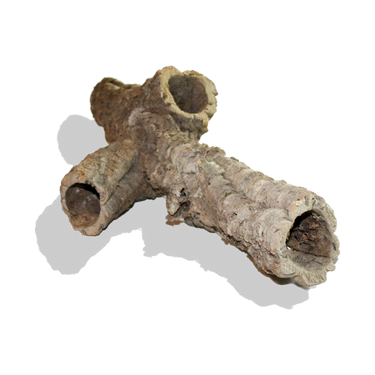


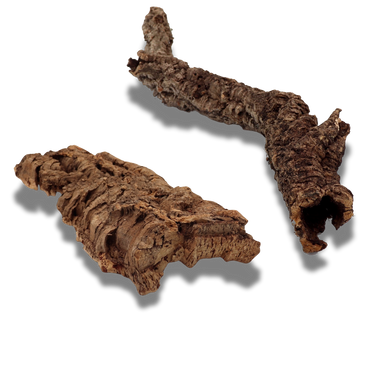

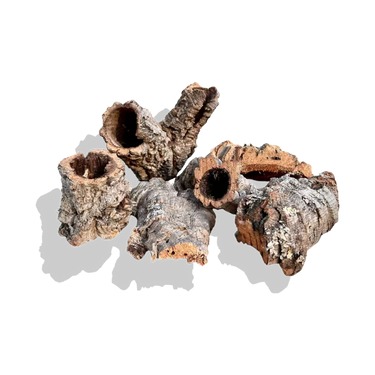

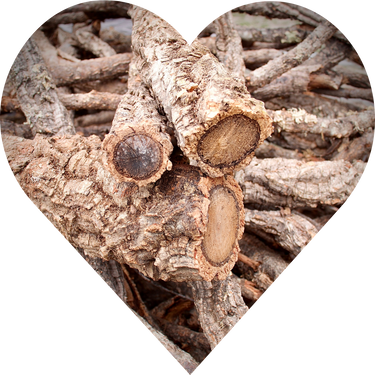
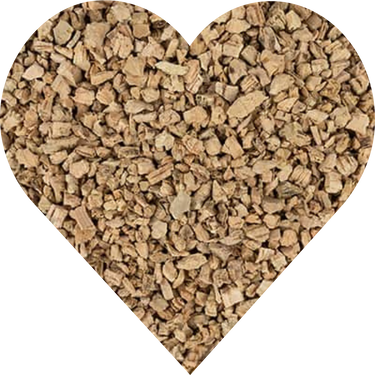

Cork Haven imports virgin cork bark from the cork oak forests of Portugal and grades it by hand at our warehouse in Madison, Florida. That is the whole business. Every piece is sorted and graded before it ships.
Where cork comes from
Cork is the bark of Quercus suber, the cork oak, and it grows almost entirely in the western Mediterranean. Portugal accounts for roughly half the world's supply.
The thing most people do not know about cork is that harvesting it does not harm the tree. The bark is stripped by hand, in summer, by workers using a long-handled axe and a technique that takes years to learn - cut too deep and you damage the layer the bark regrows from. A cork oak is first stripped at around 25 years old and then roughly every nine years after that, for a working life of well over a century.
That nine-year cycle is why cork oak forest is one of the very few landscapes that gets healthier the more it is worked. The trees are worth more standing than felled, so they stay standing, and the montado woodlands they form support an ecosystem that includes the Iberian lynx and the Iberian imperial eagle. Buying cork is one of the rare cases where consumption and conservation point the same direction.
Virgin cork is the first bark taken from a tree, and it is what we sell. It is thicker, more irregular, and far more characterful than the smoother later harvests that go into wine corks and flooring. For a terrarium background or an orchid mount, that irregularity is the entire point.
What happens in Madison
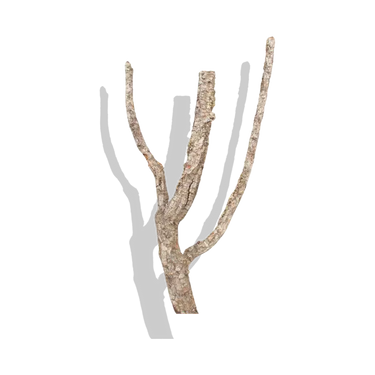
We grade the bark by shape and by size - flats, rounds, half rounds, branches, panels, chips and micro pieces and heat treat every piece before it ships.
Nothing else is added. No chemicals, no dyes, no coatings, no sealants. Cork is already water resistant, rot resistant and unusually resistant to mould; it does not need help, and anything sprayed onto it would end up in your enclosure.
Who we sell to
Reptile and amphibian keepers are most of our customers - cork has been the default hide and background material in the hobby for decades, because it is the one natural material that survives a humid enclosure indefinitely.
Orchid and epiphyte growers are the next largest group. A mounted plant on cork comes closer to how it grows in the wild than anything in a pot.
We also supply shops, breeders and commercial growers (We also ship pallets). If that is you, see wholesale and bulk.
Questions
The buying guide works through which shape suits which setup, by species and enclosure type. The FAQ covers cleaning, mounting and how much you need. If neither answers it, ask us !