

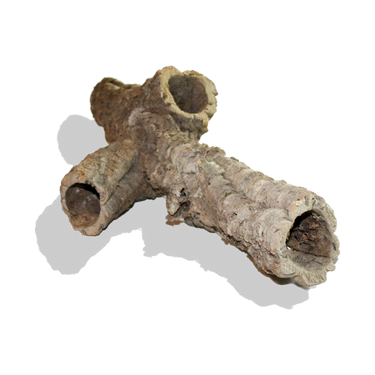


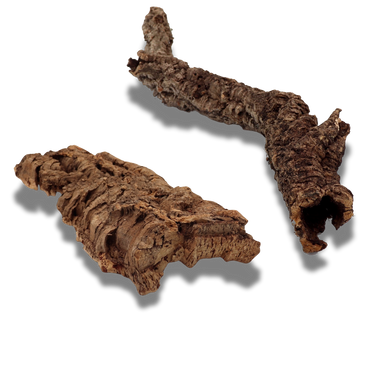

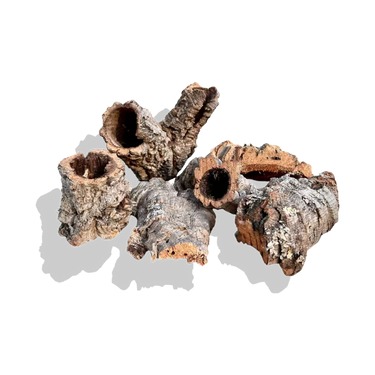

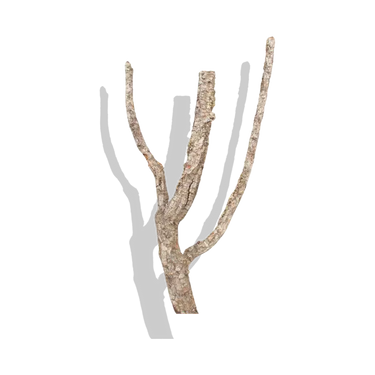
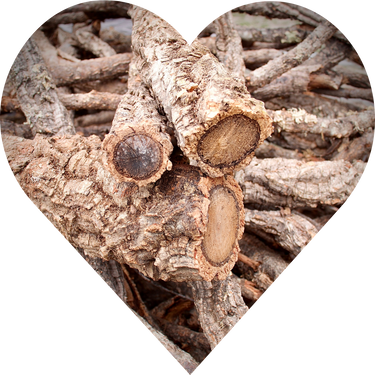

Bioactive setups rely on natural materials that can handle moisture, support a clean up crew, and last without rotting. Cork bark checks all three boxes, which is why it shows up in so many bioactive builds.
It resists mold and rot
Cork is naturally mold resistant, so it holds up in the humid conditions a bioactive enclosure needs. Where softer woods break down and foul the soil, cork stays stable for years.
It works with your clean up crew
Isopods and springtails hide and graze along cork surfaces, especially on the textured underside of flats and rounds. The bark gives them shelter without trapping moisture against the glass.
It anchors plants
Cork flats and panels make a solid mounting surface for ferns, moss, and other epiphytes. Roots grip the bark easily, and the surface holds enough humidity to keep mounts happy.
Ground cork for the base layer
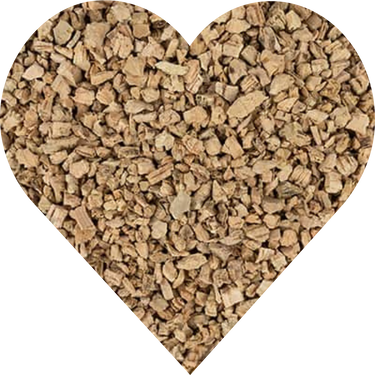
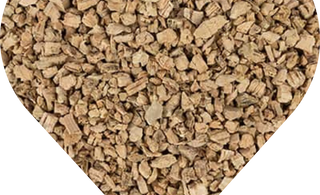
Ground cork substrate can be mixed into your soil layer to improve drainage and structure. It keeps the substrate from compacting, which helps both your plants and your clean up crew.
For a bioactive build, a mix of flats for the background, a round or two for hides, and some ground cork for the substrate covers most of what you need. If you want to keep it simple, a Sellers Choice box is an easy starting point.
Building bioactive? The Complete Vivarium Kit gives you a background, hide, branch, and substrate together, or see all our bundles and save 5%.